


 Call Us

How Do I Know if My House Needs Rewiring?
Your house may need rewiring if the existing electrical cables are deteriorated, damaged, unsuitable for the current installation or no longer able to reliably support the home’s electrical requirements.
However, the age of the house alone does not mean the entire property needs rewiring.
Some older Sydney homes have already had substantial electrical upgrades. Others contain a mixture of original wiring, newer circuits and renovated areas.
The right first step is usually an electrical safety inspection of the older home, followed by testing where required.
That helps determine whether you need: A local repair → New circuit → Partial rewire → Full house rewire rather than assuming the most extensive option.
What Are the Signs a House May Need Rewiring?
1. Your Wiring Is Very Old or Its History Is Unknown
Older wiring should be assessed based on its condition and type, rather than simply its age.
Some older Australian homes used wiring with rubber insulation, which can deteriorate and become brittle over time. NSW Government advice recommends that homes built before the 1980s be considered for inspection for aged or faulty wiring.
If you have owned the property for years and do not know whether the wiring has ever been upgraded, an inspection can establish what is actually installed.
2. Circuit Breakers Keep Tripping
Repeated circuit tripping can indicate an appliance fault, overloaded circuit, wiring problem or another electrical issue.
It does not automatically mean your home needs rewiring.
The fault should be diagnosed first.
Our guide to why a circuit breaker keeps tripping explains the common causes, while MPV Group’s electrical fault finding service in Sydney can determine whether the problem lies with an appliance, individual circuit or wider electrical installation.
3. Your Lights Regularly Flicker or Dim
One flickering light may simply involve the globe or fitting. Repeated flickering across several rooms may indicate a connection, circuit, switchboard or electricity-supply issue.
It is another symptom worth investigating rather than assuming rewiring is immediately required. See Why Are My Lights Flickering? if this is one of the problems you’re experiencing.
4. Power Points Are Hot, Buzzing or Sparking
Power points should not repeatedly spark, crackle, buzz or become unusually hot. These symptoms may indicate worn outlets, poor connections, damaged wiring or circuit issues.
Sometimes replacing the affected outlet is enough.Other times, testing may reveal a broader problem with the wiring supplying it.
Our guide to sparking, buzzing and hot power points explains what the different symptoms can mean.
5. You Can Smell Electrical Burning
A burning electrical smell requires prompt investigation. It may come from a local connection, outlet, appliance, switchboard component or electrical cable.
A burning smell alone does not prove the whole house requires rewiring, but it should never be ignored. See Burning Smell From a Switchboard or Power Point: What Should You Do? for immediate guidance.
6. Your Home Still Has an Older Fuse Board
An old switchboard can be a useful clue about the age of the wider electrical installation. Ceramic fuses, limited safety-switch protection or an overcrowded board do not automatically mean the entire house needs rewiring.
In many homes, the wiring may remain suitable while the switchboard needs modernising. MPV Group’s switchboard upgrades in Sydney replace outdated fuse boards and improve circuit protection and capacity for modern household loads.
Does Having Ceramic Fuses Mean My House Needs Rewiring?
No. Ceramic fuses do not automatically mean the wiring throughout your house needs replacing.
They do indicate that the switchboard uses older technology and that the wider electrical installation is worth assessing.
An electrician may find: Old switchboard + suitable wiring or Old switchboard + ageing wiring or A mixture of old and upgraded circuits.
That is why inspection and testing should come before deciding on the scope of work.
How Old Is Too Old for Electrical Wiring?
There is no single age at which every home’s electrical wiring must be replaced.
The important factors are: Wiring type | Insulation condition | Previous upgrades | Electrical testing | Circuit condition | Current household demand
Some older wiring types can deteriorate significantly with age, while more modern wiring may remain serviceable much longer.
NSW Government specifically advises homeowners of properties built before the 1980s to consider having the wiring inspected for aged or faulty components.
So if you are searching “how old is too old for electrical wiring?”, the better question is: What type of wiring is installed, and what condition is it in?
Does a House Built Before 2000 Need Rewiring?
Not necessarily. A house built before 2000 may have perfectly serviceable wiring, particularly if it has been renovated or electrically upgraded. However, older properties are worth checking for appropriate safety-switch protection.
NSW Government guidance says properties built before 2000 should have a licensed electrician check whether suitable safety switches are installed. MPV Group’s Safety Switch and RCD services can assess existing RCD protection alongside the wider electrical system.
Partial Rewire vs Full House Rewire: What’s the Difference?
Partial House Rewire: A partial rewire replaces wiring only in specific parts of the home.
This may make sense where one section is older or damaged while other circuits have already been upgraded and remain suitable.
For example, an older original section of the house may require work while a newer extension has modern wiring.
Full House Rewire: A full rewire replaces most or all of the home’s existing fixed electrical wiring.
This may be appropriate where ageing or unsuitable wiring is widespread or where a major renovation provides the opportunity to redesign the electrical system properly.
The scope should be based on inspection and testing, not simply the property’s age.
Can You Rewire One Room at a Time?
Sometimes, yes. A staged or partial rewire can be possible where the electrical circuits and areas being replaced can be clearly separated from the wiring that remains. This can work particularly well during renovations.
However, repeatedly upgrading isolated sections without considering the overall electrical design can also leave the home with a complicated mixture of old and new circuits. An electrician should look at the whole property before determining whether staged work makes sense.
Does a Switchboard Upgrade Mean the House Has Been Rewired?
No. A switchboard upgrade and house rewiring are different electrical jobs. A switchboard upgrade improves the equipment that distributes and protects the home’s electrical circuits.
A rewire replaces the electrical cabling running throughout the property. Sometimes both are required. Sometimes only the switchboard needs upgrading.
And sometimes the switchboard is already modern but ageing wiring elsewhere needs attention. MPV Group’s existing switchboard service specifically assesses board condition and load demand before recommending the appropriate upgrade.
Does My House Need Rewiring Because the Power Keeps Tripping?
Not automatically. Repeated tripping can be caused by:
Faulty appliance → Circuit overload → Short circuit → Moisture → Wiring fault → Switchboard issue
This is why electrical fault finding should normally happen before a major rewiring recommendation. If the same circuit repeatedly trips, the problem may be localised.
If testing identifies deterioration or problems across several circuits, broader wiring work may then be appropriate.
Can Old Wiring Handle Modern Appliances?
It depends on the electrical system. Today’s Sydney homes may have significantly greater electrical demand from: Air conditioning | Induction cooking | Electric hot water | Home offices | Pool equipment | EV chargers | Solar | Batteries
An older home may have sound wiring but insufficient circuits or electrical capacity for these newer loads. In that situation, a full rewire may not be necessary.
The better solution might involve new dedicated circuits, switchboard improvements or broader electrical upgrades in Sydney.
MPV’s current Electrical Upgrades service specifically covers wiring upgrades, circuit and load upgrades, switchboards and capacity improvements for modern electrical demand.
Should I Rewire Before Installing an EV Charger?
You do not automatically need to rewire the house before installing an EV charger. However, the electrical supply, switchboard and available capacity should be assessed.
The EV charger will generally require its own appropriately designed electrical circuit. If you’re planning an EV, read What Electrical Work Is Needed to Install an EV Charger at Home? before buying the charger.
This is a perfect example of why older-home electrical planning should look at the whole system, not just individual appliances.
What About Solar, Batteries and Induction Cooking?
The same principle applies. Adding a solar system, home battery, induction cooktop, electric hot water or additional air conditioning can change the electrical requirements of the house.
That does not mean: New appliance = full rewire.
Instead, an electrician should assess whether the existing switchboard, circuits, wiring and electrical capacity can support the new equipment. MPV Group’s electrical upgrades are specifically designed around this type of modernisation.
Should I Rewire During a Renovation?
A renovation can be one of the best times to assess and upgrade old wiring. Walls and ceilings may already be open, access can be easier and the electrical system can be planned around the finished home rather than the old layout. It is also an opportunity to consider future requirements such as:
- More power points
- Dedicated appliance circuits
- Induction cooking
- Air conditioning
- EV charging
- Solar and battery storage
If you’re renovating an older Sydney home, speak to an electrician early rather than leaving electrical planning until after walls and finishes are complete.
Can Old Wiring Affect Only Part of the House?
Yes.Sydney homes that have been extended or renovated over many years can contain different generations of electrical wiring. One section may have newer circuits while another still contains older wiring.
This is another reason a property’s age alone is not enough to determine whether a full rewire is required. If you are already experiencing power loss in one section, see Why Is Only Part of My House Without Power?.
How Does an Electrician Check Whether a House Needs Rewiring?
The process should start by understanding the existing electrical installation.
Depending on the property, an electrician may assess:
- Switchboard and circuit protection
- Existing wiring type and condition
- Safety-switch protection
- Circuit performance
- Signs of deterioration or previous alterations
- Current and planned electrical loads
MPV Group’s Electrical Safety Inspection for Older Sydney Homes is the natural starting point if you simply do not know what condition the system is in. That existing page already positions inspection as a way to distinguish between a local repair, switchboard work, additional circuits and broader wiring upgrades.
How Much Does House Rewiring Cost in Sydney?
House rewiring costs vary significantly because the scope can be very different from one property to another.
Price is affected by factors such as: Property size | Number of circuits | Access | Wall construction | Existing wiring | Switchboard work | Renovation status | Number of outlets and fittings
A single-storey home with good roof and underfloor access can be very different to a finished double-brick property with limited cable access.
Rather than quoting a generic figure that may not reflect your home, the property should be assessed and the required scope clearly defined first. This also helps determine whether you actually need a full rewire or a smaller electrical upgrade.
Do I Need to Move Out During a House Rewire?
Not always, but a full rewire can be disruptive. Whether you can stay in the property depends on the scope of work, access, how the project is staged and whether other renovation work is occurring at the same time.
For larger rewiring projects, sections of the home’s electricity may need to be unavailable while circuits are replaced and tested. This should be discussed during the quotation and planning stage so you know what to expect.
What Should You Do if You Think Your Sydney Home Needs Rewiring?
Don’t start by assuming you need to replace every cable in the house. Start by establishing what you have.
Step 1: Have the electrical system assessed
An older-home electrical safety inspection can identify obvious concerns and areas requiring testing.
Step 2: Investigate existing faults
If circuits are already tripping or parts of the home are unreliable, electrical fault finding can help determine why.
Step 3: Assess the switchboard
An old fuse board may require a switchboard upgrade even where much of the existing wiring remains suitable.
Step 4: Think about future electrical demand
Renovating? Buying an EV? Installing induction, solar, batteries or more air conditioning? Planning these requirements together can prevent the electrical system being upgraded several times. MPV Group provides electrical upgrades across Sydney for this broader system planning.
Old House? Don’t Assume. Inspect First.
An older Sydney home does not automatically need a complete rewire.
The right solution might be: Local repair → New circuit → Switchboard upgrade → Partial rewire → Full rewire
The decision should be based on what wiring is installed, what condition it is in and what you need the house to support.
MPV Group provides residential electrical services across Sydney, from fault finding and switchboard upgrades to wiring and complete electrical system upgrades. Its existing residential service offering already includes both electrical upgrades and full rewiring works.
Not sure what wiring is behind the walls? Contact MPV Group to have your home’s electrical system assessed before deciding whether a partial or full rewire is required.
1 Company – 3 Integrated Services
Complete Electrical, Solar and Security Solutions Across Sydney

Electrical
Licensed electrical services across Sydney, including upgrades, fault finding, switchboards, lighting, maintenance and complete electrical solutions.

Solar
Reliable solar and battery systems designed to reduce energy costs, improve efficiency and support smarter long-term energy use.
Security
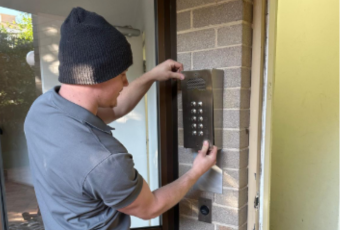
Integrated security solutions, including CCTV, alarms, access control and intercom systems to help protect people, property and assets.
House Rewiring FAQs
These FAQs answer common questions about old wiring, partial and full house rewiring, switchboards and how Sydney homeowners can determine whether their electrical system needs upgrading.
How do I know if my house needs rewiring?
Common warning signs include deteriorated old wiring, repeated electrical faults, hot or damaged outlets, burning smells and problems across multiple circuits. An electrical inspection and testing are the best way to determine whether repair, partial rewiring or full replacement is required.
How old is too old for house wiring?
There is no fixed age at which all electrical wiring must be replaced. Wiring type, condition and previous upgrades matter more than the age of the house alone. NSW guidance recommends considering an inspection where a home was built before the 1980s and may still contain aged wiring.
Does a house built before 1980 need rewiring?
Not automatically. However, NSW Government recommends that homes built before the 1980s be considered for inspection for aged or faulty wiring. Testing can determine what needs to be retained, repaired or replaced.
Does a house built before 2000 need rewiring?
No. Age alone does not determine whether rewiring is required. Homes built before 2000 should, however, have their safety-switch protection checked if its status is unknown.
Do ceramic fuses mean my house needs rewiring?
No. Ceramic fuses indicate an older switchboard, but the condition of the wiring must be assessed separately. You may need a switchboard upgrade without needing a full house rewire.
Can I partially rewire my house?
Potentially. A partial rewire may be suitable where some circuits or sections of the home remain serviceable while others need replacement.
Is a full rewire always necessary in an old house?
No. Some older homes need only local repairs, new circuits or a switchboard upgrade. A full rewire should be recommended where the condition and extent of the existing electrical installation justify it.
Does frequent circuit tripping mean my wiring is bad?
Not necessarily. A faulty appliance, circuit overload or other local electrical fault can also cause repeated tripping. Fault finding should determine the cause first.
Does flickering lighting mean my house needs rewiring?
Not automatically. Flickering lights can have several causes, including fittings, connections, individual circuits or electricity supply issues.
Do hot power points mean the wiring needs replacing?
A hot outlet may be caused by a local connection or damaged power point, but it can also indicate a wider circuit problem. It should be inspected before deciding what work is needed.
Should I rewire before renovating?
It is worth having the electrical system assessed before a major renovation. Open walls and ceilings can make electrical upgrades easier and allow new circuits and future electrical requirements to be planned properly.
Do I need to rewire before installing an EV charger?
Not automatically. An EV charger usually requires a dedicated circuit and an assessment of the switchboard and available electrical capacity, but this does not necessarily mean the whole house needs rewiring.
Does a switchboard upgrade include rewiring the house?
No. A switchboard upgrade replaces or improves the board and circuit protection. House rewiring replaces electrical cabling throughout part or all of the property.
How much does it cost to rewire a house in Sydney?
The cost depends on the size and construction of the property, wiring condition, circuit requirements, access and whether the work is a partial or full rewire. A site assessment is the best way to establish an accurate scope and quote.
Can I live in my house while it is being rewired?
Sometimes. It depends on how extensive the rewire is and whether the project can be staged while parts of the electrical system remain operational.
Who can assess whether my Sydney home needs rewiring?
A licensed electrician can inspect and test the electrical system before recommending repair, partial rewiring or full rewiring. MPV Group provides residential electrical services across Sydney covering electrical inspections, fault finding, switchboard work, wiring upgrades and rewiring.
Blog
Related articles
Catch up on the latest MPV Group electrical, solar and security news and insights.



MPV Solar is committed to providing industry-leading solar energy solutions across Sydney, backed by a proven track record of successfully completing over 5,000 projects. As a family-owned business, we prioritise personalised service and truly value our clients, ensuring that each system is tailored to meet your unique energy needs.
Copyright 2026. All Rights Reserved.
Created by Codex Digital and Yakka Consulting
Get in Touch
MPV Solar
Unit 3, 43-51 College St,
Gladesville NSW 2111
info@mpvgroup.com.au
(02) 9817 0333
Monday – Friday
8:30 – 5:00pm