


 Call Us

Can My Existing Electrical System Handle an Induction Cooktop?
Possibly. Many Sydney homes can support an induction cooktop, but the existing switchboard, circuit capacity, electrical supply and specific cooktop requirements need to be checked first.
An induction cooktop can be a significant electrical load. Depending on the model, your home may need: A dedicated circuit → Appropriate circuit protection → Suitable cabling → Switchboard capacity → Sufficient overall electrical supply
If you’re planning induction cooking as part of a renovation or move away from gas, MPV Group’s Electrical Upgrades Sydney service can assess whether your existing electrical system is ready.
What Are the Electrical Requirements for an Induction Cooktop?
The exact electrical requirements depend on the cooktop you choose.
Induction cooktops come in different sizes and power ratings, so there is no single electrical setup that suits every model. Before installation, an electrician should check the manufacturer’s requirements along with the home’s existing electrical system. This normally means looking at:
- Cooktop power rating
- Dedicated circuit requirements
- Cable size
- Circuit protection
- Switchboard capacity
- Single-phase or three-phase supply
The electrical installation then needs to be designed around the actual appliance rather than guessing based on the size of the cooktop.
Does an Induction Cooktop Need a Dedicated Circuit?
Many built-in induction cooktops require a dedicated high-power electrical circuit.
A dedicated circuit means the cooktop has its own circuit rather than sharing capacity with general kitchen power points or other appliances. Whether your home already has a suitable circuit depends on the existing kitchen wiring and what appliance was previously installed. Replacing gas with induction, for example, can be very different electrically from replacing an existing electric cooktop.
Can I Plug an Induction Cooktop Into a Normal Power Point?
Most full-size built-in induction cooktops should not simply be assumed to work from a standard power point.
Portable benchtop induction units are different and may be designed as plug-in appliances. A built-in induction cooktop can have substantially greater electrical requirements and may need to be hardwired to a dedicated circuit.
Always check the manufacturer’s specifications and have the electrical requirements assessed before purchasing the cooktop. That can save you from buying an appliance and then discovering that additional electrical work is required before it can be installed.
Do I Need Three-Phase Power for an Induction Cooktop?
Not necessarily. Many induction cooktops can be installed in homes with single-phase electricity. Whether single-phase is suitable depends on:
- The cooktop’s electrical requirements
- The home’s available electrical capacity
- Other major appliances
- How much electricity may be used at the same time
A high-powered cooktop does not automatically mean the entire house must be converted to three-phase.
If you’re unsure about the difference, see Single-Phase vs Three-Phase Power for a Sydney Home.
That article looks at the whole-home decision, including induction, EV charging, air conditioning and other high-demand equipment.
When Might Three-Phase Power Be Worth Considering?
Three-phase becomes more relevant when the issue is not just the induction cooktop but the total electrical demand of the property.
For example, a home may be running: Induction cooking + EV charger + ducted air conditioning + electric hot water + pool equipment
The question then becomes: Can the existing supply comfortably support the way the entire home is being electrified? An electrician can assess the load and determine whether the better solution is:
- A new circuit
- A switchboard upgrade
- Load management
- A supply upgrade
or Three-phase power
Three-phase should be based on actual electrical requirements rather than installed automatically because one new appliance is being added.
Will I Need a Switchboard Upgrade for Induction Cooking?
Possibly, particularly if your switchboard is older, already crowded or does not have capacity for the new circuit. An upgrade may be worth investigating if your switchboard:
- Still has ceramic fuses
- Has limited safety-switch protection
- Has no spare circuit capacity
- Is already showing signs of overload
- Needs to support several new electrical loads
MPV Group provides Switchboard Upgrades Sydney for homes needing modern circuit protection, additional capacity or preparation for new electrical loads.
Can I Install Induction if I Still Have Ceramic Fuses?
You should have the switchboard assessed before installing a high-demand induction cooktop. Ceramic fuses indicate an older style of electrical protection.
That does not automatically mean your house needs rewiring, but the switchboard may need modernising before additional high-load circuits are installed.
Our guide to Ceramic Fuse Box vs Modern Switchboard explains the differences between ceramic fuses, circuit breakers, safety switches and modern switchboard protection.
Does Induction Cooking Mean I Need to Rewire My House?
No. Installing an induction cooktop does not automatically mean your home needs rewiring. Often the electrical work is more targeted. You may only need:
A new dedicated circuit or A switchboard upgrade and new circuit
Broader wiring work would only become relevant if the existing wiring is deteriorated, unsuitable or other electrical problems are identified. If you’re in an older Sydney home and unsure about the condition of the wiring, read Does My Sydney Home Need Rewiring?
Can an Older Sydney Home Handle an Induction Cooktop?
Yes, potentially. The age of the house alone does not determine whether induction can be installed.
Older Sydney homes are often a mixture of electrical upgrades completed at different times.
A property might have:
- Older wiring
- A newer kitchen circuit
- An upgraded switchboard or
- Original electrical infrastructure throughout
The important thing is establishing what is actually installed.
If the electrical history is unclear, start with an electrical safety inspection for the older home before planning major new loads.
Can I Replace a Gas Cooktop With Induction?
Yes, but changing from gas to induction can require more than simply replacing the appliance. A gas cooktop does not place the same electrical demand on the home as a full-size induction cooktop.
That means a new dedicated electrical circuit may need to be installed from the switchboard to the kitchen. You should therefore check the electrical requirements before ordering the induction cooktop, particularly during a kitchen renovation. If the existing gas appliance is being removed, the gas connection also needs to be safely disconnected by an appropriately licensed gasfitter
Can I Replace an Electric Cooktop With Induction?
Possibly, but the existing circuit still needs to be checked. Just because there is already an electric cooktop does not mean its circuit is suitable for the new induction model.
The replacement appliance may have:
- A different maximum power demand
- Different circuit requirements
- Different connection requirements
The electrician should compare the existing circuit with the specifications of the new appliance before installation.
Why Does My Induction Cooktop Need So Much Power?
Induction cooking uses electricity to create an electromagnetic field that heats compatible cookware directly. Full-size cooktops can operate several cooking zones at once, meaning the potential electrical demand can be substantial.
However, maximum appliance rating does not necessarily mean every cooking zone is drawing maximum power continuously. The electrical circuit still needs to be designed correctly for the appliance and manufacturer’s installation requirements.
Can My Switchboard Handle an Induction Cooktop and EV Charger?
Maybe, but these loads should be considered together. An EV charger and induction cooktop can both add significant new demand to the home.
If you’re adding both, the electrician should assess the whole property, not install each appliance in isolation.
That assessment could look at: Supply capacity → Switchboard → Existing circuits → EV charger → Induction → Air conditioning → Hot water
MPV Group’s Electrical Upgrades Sydney service includes circuit, load and system-capacity upgrades designed around modern household electricity use.
What if I Also Have Solar and a Home Battery?
Solar and battery systems can form part of an increasingly electrified home, but having solar does not automatically mean the home’s electrical infrastructure can support every new appliance.
The switchboard, circuits and electricity supply still need to be suitable for the loads being connected.
If you’re planning: Induction + EV + Solar + Battery + Electric hot water
it makes sense to assess them as one future electrical system rather than completing isolated upgrades one at a time. This can reduce the risk of installing a new switchboard now and finding it needs further modification later.
Should I Upgrade the Switchboard Before Buying the Cooktop?
Have the switchboard assessed first, but don’t upgrade it unnecessarily. Ideally, choose the induction cooktop or narrow down the model first so the electrician knows its actual electrical requirements.
Then assess:
- Can the existing circuit support it?
- Is a new circuit required?
- Is there room in the switchboard?
- Does the home have enough electrical capacity?
If the switchboard does need replacing, our guide to How Much Does a Switchboard Upgrade Cost in Sydney? explains what influences the scope and price.
Should I Plan Induction During a Kitchen Renovation?
Yes. Electrical planning should happen before the kitchen cabinetry and finishes are completed. If a new circuit needs to run from the switchboard to the kitchen, access is generally much easier while renovation work is underway. You may also be adding:
- New ovens
- Dishwasher
- Additional power points
- Rangehood
- Lighting
- Air conditioning
Planning the electrical requirements together allows circuits and switchboard capacity to be considered as one system.
What if My Power Starts Tripping After Installing Induction?
Repeated tripping should be investigated rather than treated as normal. The cause might involve the appliance, circuit protection, electrical load or another fault.
Do not repeatedly reset a breaker that continues to trip. MPV Group’s Electrical Fault Finding Sydney service can determine whether the problem is with the appliance circuit, switchboard or wider electrical installation.
How Do I Know if My Home Has Enough Electrical Capacity?
You do not need to calculate this yourself. A licensed electrician can assess the home based on:
- Existing electrical supply
- Switchboard configuration
- Current circuits
- Major appliances
- New induction cooktop
- Future electrical loads
This is more useful than looking only at the cooktop.
A home that comfortably supports induction today may have very different requirements if you’re planning an EV charger, electric hot water and ducted air conditioning next year.
What Should I Check Before Buying an Induction Cooktop?
Before committing to a model, check three things.
1. The Cooktop’s Electrical Requirements: Find the model’s electrical specifications.
2. Your Existing Switchboard: Make sure there is suitable protection and capacity for the required circuit.
3. Your Whole-Home Electrical Demand: Consider what other large electrical loads you already have or plan to add.
If you’re unsure, MPV Group can assess the property before you purchase the appliance. That is much easier than discovering electrical upgrade requirements after the new cooktop has arrived.
Going Induction? Start With the Electrical System.
Switching to induction is not simply an appliance decision. It is also an electrical one.
Before installation, consider: Cooktop requirements → Dedicated circuit → Switchboard → Electrical capacity → Future household loads
For many Sydney homes, the solution may be as straightforward as installing the correct dedicated circuit.
For others, particularly older homes or properties moving towards full electrification, additional electrical upgrades may make sense. MPV Group provides residential electrical services across Sydney, including new appliance circuits, switchboard upgrades, electrical capacity assessments and broader home electrical upgrades.
Planning an induction cooktop? Contact MPV Group before installation to check whether your home’s electrical system is ready.
1 Company – 3 Integrated Services
Complete Electrical, Solar and Security Solutions Across Sydney
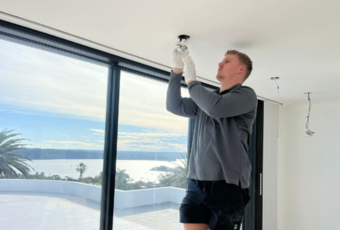
Electrical
Licensed electrical services across Sydney, including upgrades, fault finding, switchboards, lighting, maintenance and complete electrical solutions.
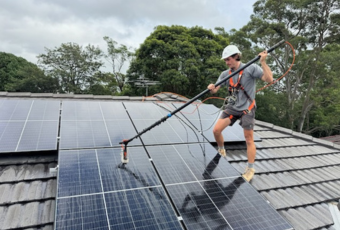
Solar
Reliable solar and battery systems designed to reduce energy costs, improve efficiency and support smarter long-term energy use.
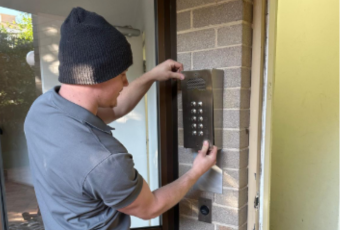
Security
Integrated security solutions, including CCTV, alarms, access control and intercom systems to help protect people, property and assets.
Induction Cooktop Electrical Requirements FAQs
These FAQs answer common questions about induction cooktop electrical requirements, dedicated circuits, switchboard capacity and whether Sydney homes need single-phase or three-phase power.
Does an induction cooktop need a dedicated circuit?
Many built-in induction cooktops require a dedicated high-power circuit. The exact circuit requirements depend on the cooktop model and should be confirmed from the manufacturer’s specifications. NSW guidance specifically notes that a dedicated high-power circuit may be required.
Do I need three-phase power for an induction cooktop?
Not necessarily. Many induction cooktops can operate in single-phase homes. The correct setup depends on the appliance and the home’s available electrical capacity.
Can induction work on single-phase power?
Yes, depending on the cooktop and electrical installation. An electrician should assess the particular model and the home’s existing capacity.
Does an induction cooktop need to be hardwired?
Many full-size built-in induction cooktops require a dedicated electrical connection rather than a standard plug, although requirements vary between models.
Can I plug an induction cooktop into a normal power point?
Portable plug-in induction cooktops may be designed for a standard outlet. Full-size built-in cooktops commonly have greater electrical requirements and should be installed according to the manufacturer’s specifications.
Do I need a new switchboard for an induction cooktop?
Not always. A switchboard upgrade may be required if the existing board is outdated, lacks suitable protection or does not have enough space or capacity for the new circuit.
Can I install induction if I have ceramic fuses?
Have the switchboard assessed first. Ceramic fuses indicate older electrical protection and the board may need upgrading before adding a substantial new electrical load.
Do I need to rewire my house for induction cooking?
Usually not solely because of the cooktop. Many installations require only a suitable dedicated circuit. Broader wiring work is only necessary where the existing electrical installation requires it.
Can an old house have an induction cooktop?
Yes. The age of the property is not the deciding factor. The condition and capacity of its electrical system need to be assessed.
Can I replace gas cooking with induction?
Yes. The new induction cooktop may require a dedicated electrical circuit, while the existing gas connection needs to be disconnected appropriately.
Can I replace an electric cooktop with induction without changing the wiring?
Possibly, but the existing circuit must be checked against the new cooktop’s requirements.
Can my home handle an induction cooktop and EV charger?
Potentially. The total electrical demand should be assessed to determine whether the existing supply and switchboard have sufficient capacity.
Will solar reduce the electrical requirements for an induction cooktop?
Solar can contribute electricity while it is generating, but the cooktop and its electrical circuit still need to be designed and installed for the appliance’s required load.
Should I have my electrical system checked before buying an induction cooktop?
It is a smart move, particularly in an older property or where you already have several high-demand electrical appliances. It can identify circuit or switchboard work before installation day.
Who can install an induction cooktop in Sydney?
Electrical installation of an induction cooktop and any required fixed wiring should be completed by a licensed electrician. NSW guidance specifically requires licensed electrical installation.



MPV Solar is committed to providing industry-leading solar energy solutions across Sydney, backed by a proven track record of successfully completing over 5,000 projects. As a family-owned business, we prioritise personalised service and truly value our clients, ensuring that each system is tailored to meet your unique energy needs.
Copyright 2026. All Rights Reserved.
Created by Codex Digital and Yakka Consulting
Get in Touch
MPV Solar
Unit 3, 43-51 College St,
Gladesville NSW 2111
info@mpvgroup.com.au
(02) 9817 0333
Monday – Friday
8:30 – 5:00pm